
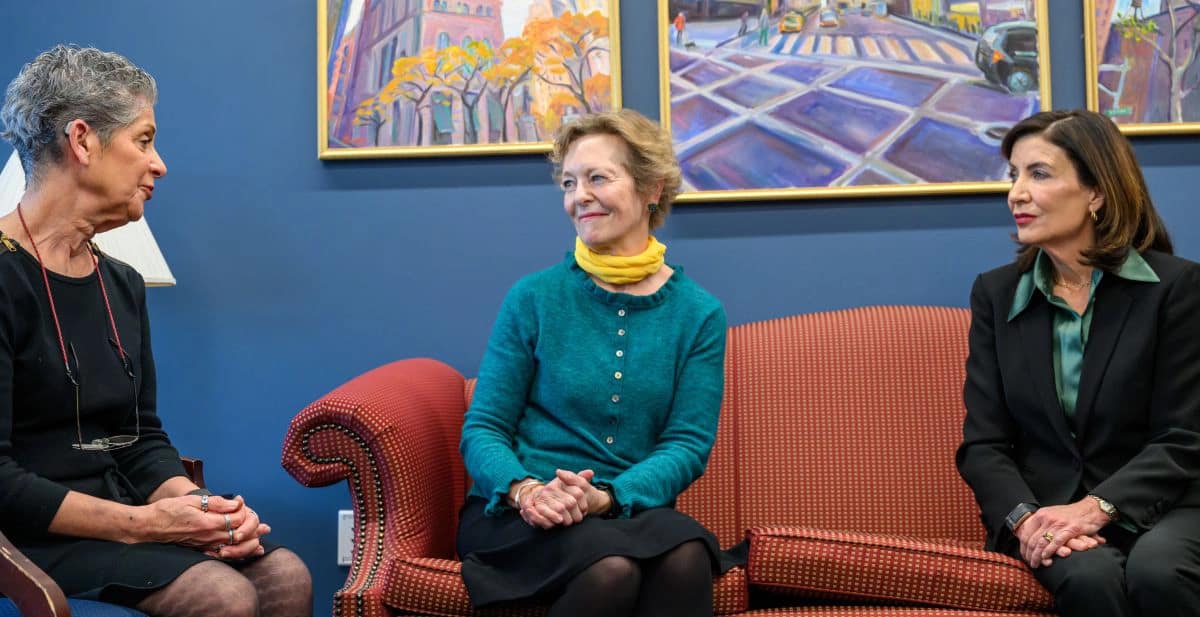
On February 6, New York Governor Kathy Hochul signed the amended Medical Aid in Dying Act, making New York the 14th U.S. jurisdiction (13 states and Washington, D.C.) to authorize medical aid in dying. The law will become effective on August 5, 2026.
As Compassion & Choices Sr. Campaign Director Corinne Carey noted on the occasion of the bill’s signing, “This law is the culmination of more than 10 years of determined, consistent effort by thousands of New Yorkers, and now the next phase of the work begins.”
That next phase is what we often refer to as an access campaign — coordinated advocacy to ensure that the legal right to medical aid in dying translates into meaningful, practical access for eligible patients across New York.
This transition from legislative advocacy to access work is one of the most important parts of end-of-life policy reform. Passing a law creates the option; reforming systems and building awareness and confidence among clinicians and their patients ensure that people can actually use it.
Decades of experience show that authorization alone does not guarantee access. Patients may not know how to begin the process of requesting medical aid in dying, clinicians may be unfamiliar with the documentation requirements and healthcare systems may still need policies and workflows to support participation.
Access campaigns address these barriers directly by:
The overall goal of access advocacy is to ensure that medical aid in dying is seamlessly integrated as a practice within the gold standard of fully-informed, patient-directed end-of-life healthcare. Patients should be able to pursue the option through their own care teams, within their own communities and without unnecessary obstacles.
One of the most important access advocacy actions individuals can take is also one of the simplest: talking with your providers about your end-of-life care priorities.
There is not a special list of participating physicians that patients can reference before beginning the medical aid-in-dying request process, nor should there be. You should be able to access medical aid in dying from your regular attending physician and clinical team as part of your overall care. The first conversations should be with the clinicians already managing your care. By starting the conversation about your end-of-life care, you give clinicians permission to discuss death and dying — an important step, since they may otherwise hesitate to raise these topics even when they believe you would welcome the discussion.
Starting these conversations can be straightforward. Some example prompts include:
These talks are not complicated clinical events. They are an extension of the same goals-of-care discussions surrounding the progression of any serious illness.
By initiating the conversation, you help overcome the near universal discomfort around death and dying, and create space for shared decision-making grounded in your values and beliefs.
Another important goal is increasing clinical awareness by ensuring that all qualified providers, including physicians and pharmacists, understand both the legal framework and the clinical workflow of the practice.
Educating clinicians benefits not only patients seeking medical aid in dying but also the broader quality of end-of-life care. Experience from authorized states shows that implementation of these laws often leads to earlier conversations about prognosis, values and care preferences, helping patients and families plan with greater clarity and confidence.
As Compassion & Choices President and CEO Kevin Díaz noted following the law’s signing, “For New Yorkers facing their final months, weeks, or days with a terminal illness, what matters most is knowing that the full range of end-of-life care will soon be available.” Ensuring clinicians are informed and prepared is essential to making that idea a reality.
A central element of this clinical advocacy is helping providers understand that they do not need extensive new training to participate. They are already skilled in the core responsibilities involved in the practice of medical aid in dying, including:
Where clinicians typically need guidance is on the process, including understanding documentation requirements, statutory safeguards and consultation procedures.
Compassion & Choices provides technical support, including continuing medical education resources, institutional policy templates and confidential one-on-one consultation through our Call Compassion helpline (800-247-7421, formerly referred to as Doc2Doc) that allows physicians and pharmacists to speak with experienced colleagues.
While individual clinicians play an important role, healthcare systems, hospitals and hospices also have a responsibility to ensure that their policies support fully-informed, patient-directed end-of-life care. Our experts work closely with institutions to help develop clear internal policies, establish referral pathways, ensure pharmacy coordination and integrate documentation into existing records workflows.
System-level readiness ensures that patients do not need to transfer care or navigate institutional barriers during one of the most vulnerable times of their lives. This goal is straightforward: wherever patients receive care, their medical teams should be prepared to discuss and support all appropriate end-of-life care options.
Among the central principles of our access advocacy is ensuring that availability does not depend on geography, income or familiarity with the healthcare system. Outreach efforts therefore focus not only on healthcare providers and institutions, but also on community organizations, patient groups and caregivers, helping ensure that accurate information on medical aid in dying reaches all of New York’s diverse communities, from Buffalo to Montauk and everywhere in between.
State-specific education materials — including multilingual resources — and local community-based training help ensure that access is not simply theoretical, but a real option for those who qualify.
Enactment of the Medical Aid in Dying Act marked a profound achievement for those who campaigned for more than a decade to bring this compassionate option to the Empire State. Now New York enters its next chapter — ensuring that every eligible patient, regardless of their address or care team, can access the full range of end-of-life care options.
Our message for New Yorkers is clear: start the conversation. Talk with your doctors, share your priorities and ask questions. Educational resources and support networks through Compassion & Choices will help guide both you and your providers through the process.
Legislation creates the legal right. Continued advocacy for meaningful access will ensure that this right becomes reality for those seeking its comfort, autonomy and dignity at the end of life.
You can read more about previous access campaigns here.
Bookmark and check our New York landing page regularly for the latest advocacy opportunities

Mail contributions directly to:
Compassion & Choices Gift Processing Center
PO Box 485
Etna, NH 03750
Compassion & Choices is a 501 C3 organization. Federal tax number: 84-1328829