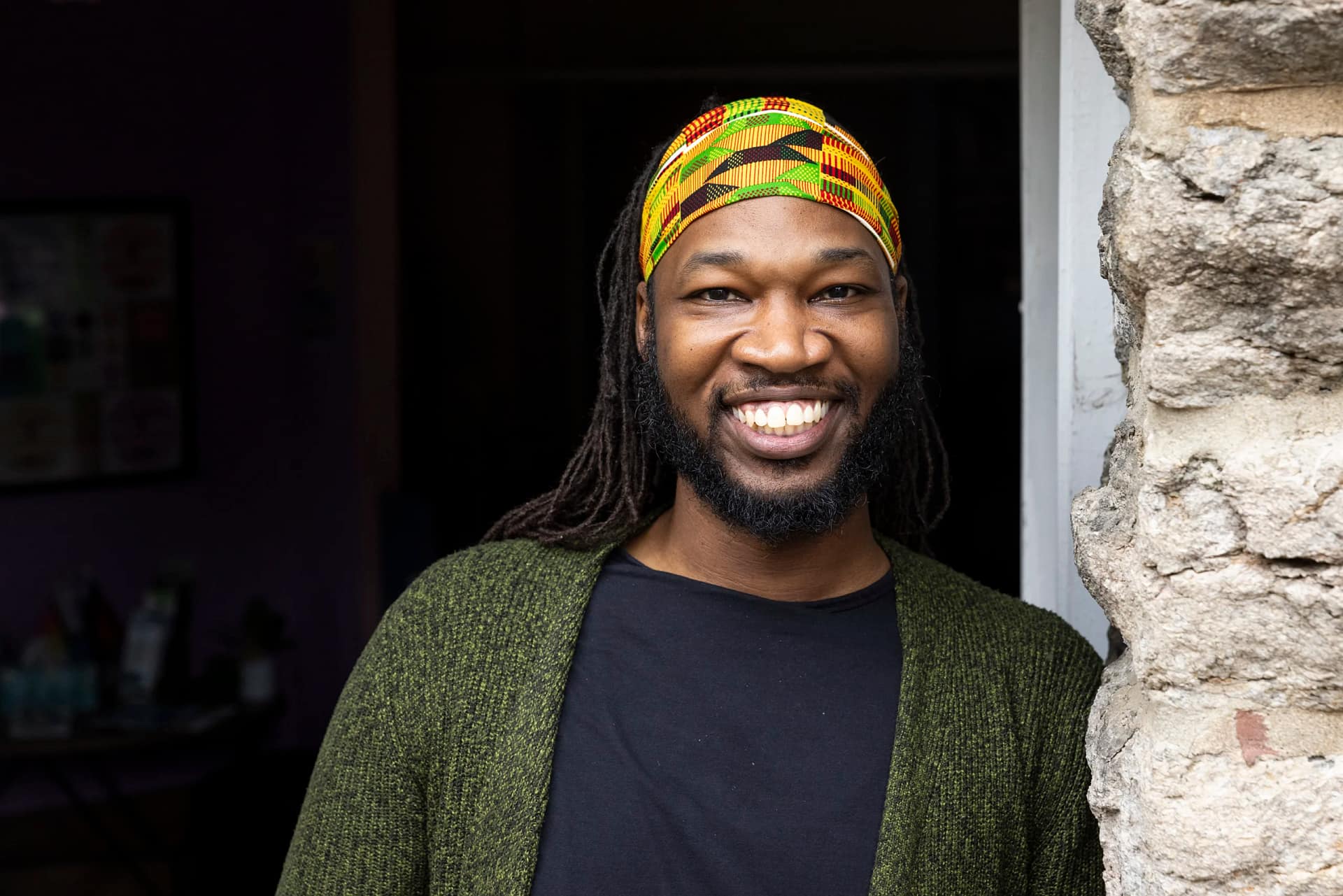
David shared his story in May of 2025.
I tell folks death doulas serve the in-between. We are in between joy and sorrow, happiness and sadness. And death doulas don’t just serve the dying person. They become a part of the family when they’re there. With queer folks and aging elders that are looking for community, you get a death doula. Because when I have clients that don’t have family, we make family.
I was catching the bus to nursing homes to see people that were no longer showing up to church. So then I’d find out what nursing home they were at. And then I would catch the bus just to say, “Hey, do you need anything?” I’d bring them a meal, and they were like, “You caught the bus all the way over here just to see me?” It was just love. Then folks would get sick, and they said, “Can you help? Can you show up? Can you be by my side?” And then it just became a thing. If somebody got sick, “Call David,” and I show up to serve.
The main goal is to serve your client, their families, whatever that looks like. It’s important that when I have a client, we discuss who is in their life that’s going to show up. Who do they know is good with paperwork? Who’s good with being organized? Because you’re going to have to be organized with talking to the funeral home, talking to the doctors, saying what’s next, writing the obituary. These people have to be detailed and not get overwhelmed. And then who’s the person that’s actually going to cause the drama? I need to know that too because I have to be prepared to intervene and work in the space of trying to advocate while navigating all of these emotions that are happening.
[As death doulas,] we have the ability to plan and ask the tough questions even if it hurts. So when I’m talking to queer folks, I need to know, “Do you have relationship with your mama and your daddy?” Because if you do not, we also have to have another conversation: If they show up, what do we do? So those are conversations that I think give queer folks the liberty and freedom to enjoy life knowing that whenever it happens, they had control over death.
Legacy is how we remember our stories, because our stories are not always beautiful. They’re not always pretty. Sometimes they’re violent, but we tell them, and we retell them, and we tell them to the next generation: what we’ve gone through and what it looks like to show up and how we don’t want to go back to that way of having to live inside of fear. That’s what legacy means for me as far as a queer person in this space of death and dying. How do we want to be remembered? When folks say our names, what are they going to think of?
Discover our step-by-step guide for the LGBTQ+ community in preparing for end-of-life decisions.
We're here to support you. Call Compassion today and connect with our experts.

Mail contributions directly to:
Compassion & Choices Gift Processing Center
PO Box 485
Etna, NH 03750
Compassion & Choices is a 501 C3 organization. Federal tax number: 84-1328829