At the age of 24, Ana Nelson was dying from ALS. For years, she’d taken advantage of all medical treatments available, doing everything she could to stay alive. But as her disease progressed, she was in constant pain.
Ana was a staunch disability rights advocate as well as a longtime supporter of medical aid in dying. In 2019, on hospice care in Denver, Ana requested a prescription for aid-in-dying medication. Being able to make her own end-of-life decisions gave Ana power over her own destiny, the same autonomy she had fought for throughout her entire life.

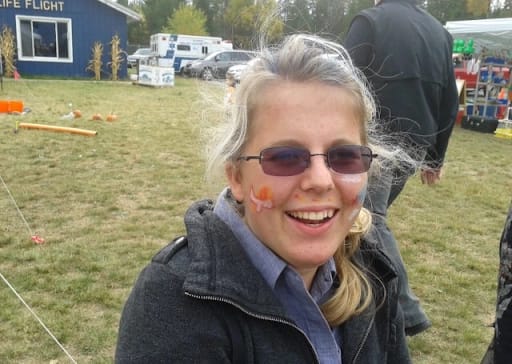
Ana Nelson flying her plane
Years after Ana’s death, her mother, Kate Gessner, received a newsletter from Compassion & Choices about United Spinal v. Colorado, a new lawsuit in Colorado attempting to overturn the state’s medical aid-in-dying law, and Compassion Legal’s request to intervene and oppose that lawsuit.
When Kate went to learn more about the lawsuit, she was shocked to discover that Ana’s name was being used by opponents of medical aid in dying to try to invalidate the very law Ana had advocated for.
No one in Ana’s family had consented to the use of Ana’s story or knew it was being used in the lawsuit. What’s more, details of Ana’s story were misstated in the complaint.
“It was gut-wrenching for all of us, all her family and friends, to see her life and death so misrepresented,” Kate said. “This was not her legacy; this was not what Ana would have wanted.”
On March 31, 2026, a United States Court Magistrate Judge recommended dismissal of the lawsuit, noting that the plaintiffs could not show that they were actually harmed by aid-in-dying laws.
For Ana’s family, the decision brought relief.
“I am so thankful that the Magistrate Judge is recommending dismissal of the plaintiffs’ case,” said Ana’s father, John Nelson. “They can no longer misrepresent my daughter’s story to take away an end-of-life care option she deeply believed in.”
What is happening in Colorado is part of a nationwide campaign by opponents of medical aid in dying to undermine these laws — laws which have functioned responsibly and predictably for 30 years in the United States, fulfilling their promise of increased choice at the end of life and strengthening the full range of end-of-life care.
For example, in states that have authorized medical aid in dying, there are higher rates of hospice utilization, earlier and more meaningful end-of-life conversations, and greater patient satisfaction.
In Colorado alone, we can see the success of medical aid in dying as a carefully safeguarded, deeply compassionate medical practice that honors individual autonomy and helps ensure that people facing terminal illness can receive care aligned with their values, beliefs, and priorities.
While opponents of medical aid in dying fabricate stories and make false claims, the real stories of Coloradans like Ana Nelson and their loved ones reveal how much it improved their last days.
Devin, Ryan, and Shannon Hibbard
Our dad, David Hibbard, was a hospice doctor who was committed to minimizing the suffering he witnessed too many patients endure without the freedom to determine when enough was enough. When he was diagnosed with Parkinson’s in 2007 and then with chronic lymphocytic leukemia a few years later, he worried he would also be without self-determination at the end of life.
Dave mountain biking in Moab
In 2015, Dad fought hard to pass Colorado’s End-of-Life Options Act, which became law in 2016. By late 2020, Dad was suffering from unrelenting pain. In December, he received approval from two doctors qualifying him for medical aid in dying. We met as a family, and Dad shared that he expected to take his prescription in early 2021.
In mid-January 2021, the prescription was called into the pharmacy. Once Dad got the medication, he was visibly more relaxed. Knowing he had it on hand allowed him to live more fully in his last months — and he truly did.
Moab, Utah, was one of Dad’s favorite places on the planet, where he had biked all of the most extreme mountain bike trails. In March, we made the trek as a family to spend three days in Moab. Dad couldn’t mountain bike anymore, but he still enjoyed driving through the beautiful landscape and reminiscing about the crazy rides he’d gone on. We watched his favorite movie, Top Gun, also the source of his nickname — Doc Viper.
At the end of the month, Dad decided he was ready. For the next few days, we listened to Dad’s stories, prepared his favorite meals, spent time in the sunshine, looked at photos, and told him we loved him a thousand times. We asked him often if he was sure that he wanted to take his medication. He never waivered. He was calm, ready; his decision brought him real peace.
On April 7, 2021, we circled around Dad for the last time. We had asked our family and friends to light a candle and drink a Fat Tire or bourbon for Dad beginning at 1 p.m. as he made his final move from this world. We said our goodbyes, and then Dad drank what he called his “magic medicine.”
We held hands, sobbed, gently rubbed his arms and legs, and told him we loved him. By 1:13 p.m., he was gone.
Jesse Ankerholz
In the summer of 2020, four years after having a double mastectomy, my wife, Andrea, found out that her cancer was back and that it had metastasized. Her oncologist gave her six to 12 months to live without treatment, maybe a little longer with treatment.
Jesse and Andrea at Sapphire Point, Colorado
For two months, Andrea endured radiation and other treatments, but the side effects were grueling: migraines, nausea, vomiting, and worsening fatigue. She told me, “This will potentially increase my time here, but at what cost?” I told her I would support her in whatever decisions she made.
She started researching medical aid in dying extensively. She hated hospitals and didn’t want to be doped up on pain meds, unable even to remember her own name. She didn’t want that for herself or for her loved ones.
In early 2021, she decided it was time.
As I drove back from the pharmacy in Denver with the medication, the gravity of the situation smacked me in the face, and the reality of Andrea’s mortality overwhelmed me. But as soon as I got home and saw Andrea’s relief at having the medication in hand, all that heaviness turned into gratitude.
She was brighter, bubblier; she didn’t have that fear of suffering needlessly anymore. She knew that she could have a say in what her last days looked like now that the prescription was available to her if she needed it.
For the remainder of her time, she could live her life to the fullest. We fed giraffes at the Denver Zoo, we went out to Arizona and Nebraska to see family and say our goodbyes, we made the most of our time together.
On August 5, at 9:30 p.m., after watching the sunset on our rocking swing, Andrea took her medication and fell asleep within a few minutes. She passed away four hours later at 1:30 a.m. on August 6.
I know that for Andrea, having choice and power over the way she left this world made all the difference.
The End-of-Life Justice Center at Compassion & Choices, also known as Compassion Legal, is fighting efforts to strip away patient-directed end-of-life care across the country, including in Colorado.
Before the Magistrate Judge recommended dismissal of United Spinal v. Colorado, Compassion Legal filed a motion to intervene in the case and oppose the lawsuit.
One of the proposed intervenors, Kelly Kee, is the sister of Compassion & Choices advocate Andrew Flack, who died on his own terms using medical aid in dying in California after living with terminal colon cancer. Kelly knows firsthand that medical aid in dying is about giving dying people a chance to live the time they have left to the fullest.
“Because Andrew had this option, our entire family got to be with him in the last weeks of his life and on his last day, playing Mario Kart and board games, listening to his favorite music, sharing stories from his childhood, and laughing together,” Kelly said. “It was a real gift.”
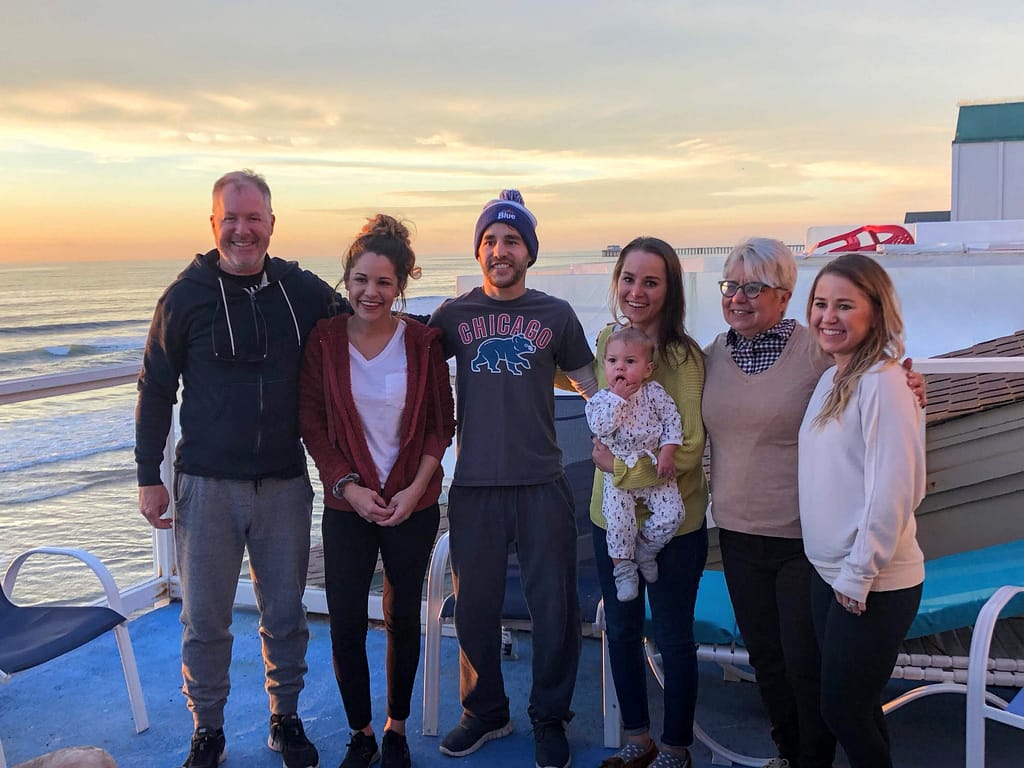
Andrew Flack with his family, including his sister Kelly
For Kelly and Ana Nelson’s family, speaking out to protect the rights and dignity of Coloradans facing terminal illness is a way to pay that gift forward. And in the event a higher court later rules that the case can move forward, Kelly, her fellow intervenors, and Compassion Legal stand ready to ensure the End of Life Options Act remains firmly in place.
To support Compassion Legal’s work defending your access to the full range of patient-directed end-of-life care, click here.

Mail contributions directly to:
Compassion & Choices Gift Processing Center
PO Box 485
Etna, NH 03750
Compassion & Choices is a 501 C3 organization. Federal tax number: 84-1328829