The family of a deceased woman, Ana Nelson, whose story is featured on the End Assisted Suicide web page and in the United Spinal v. Colorado medical aid in dying complaint, is speaking out because Ana’s story is being misrepresented and they want to correct the facts.
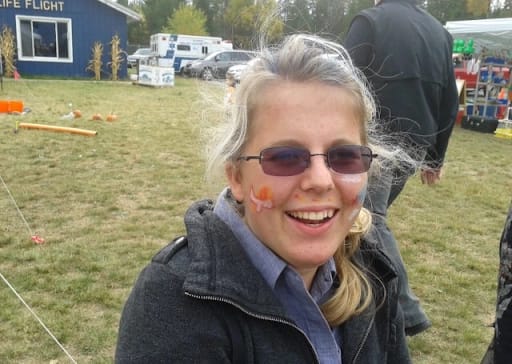
ana nelson
Ana’s mother, Kate Gessner, was recently shocked to discover that the plaintiffs in the case, including Patients Rights Action Fund, are misstating her daughter’s information to try to overturn Colorado’s medical aid-in-dying law.
Ana herself often said near the end of her ordeal, “Today is the best day I will have. Tomorrow will only be worse.” Under hospice care in Denver at the time of her death in 2019 at the age of 24, she had conceded to the inevitable course of her debilitating and terminal form of ALS. According to her family, she was a life-long disability rights advocate and supporter of the option of medical aid in dying.
“Ana’s story is portrayed in an inaccurate and inflammatory way,” said Ms. Gessner. “As a proponent of the option of medical aid in dying, she requested and ingested a prescription once her ALS symptoms became unbearable. She had gone on for years trying to fight her horrific disease. She was becoming gradually more and more debilitated from it, to the point where she was bedridden and in constant pain. Ana did everything she could to stay alive, but she was dying in spite of taking advantage of all medical treatment available.”
“I felt compelled to reach out to someone and say that the plaintiffs’ blatantly false claims are outright defamatory and should not go unanswered,” added Ms. Gessner, who stressed that no one in the family consented to the use of Ana’s story, nor did they know it was going to be used as part of this lawsuit. “It was gut-wrenching for all of us, all her family and friends, to see her life and death so misrepresented. This was not her legacy; this was not what Ana would have wanted.”
Ana’s twin brother said, “Ana was exercising her agency, which was so important to her. To Ana, being able to make her own end-of-life decisions was a form of dignity – allowing her to have power over her own destiny. Ana knew that she was dying, and wanted to maintain the same autonomy she fought for throughout her entire life. Plaintiffs are claiming they’re elevating people’s sense of agency through this lawsuit, but they’re actually subverting it.”
On March 31, 2026, a United States Court Magistrate Judge recommended dismissal of the plaintiffs’ case. The legal case at the heart of the matter is an attempt to dismantle medical aid in dying in Colorado. In 2016, voters in the state overwhelmingly approved Proposition 106, “Access to Medical Aid In Dying,” creating the Colorado End-of-life Options Act. Proposition 106 passed by 65% of Colorado voters, making it one of the most popular ballot measures in state history, with the support of over 1.7 million Coloradans.
“I am so thankful that the Magistrate Judge is recommending dismissal of the Plaintiffs’ case, so that they can no longer misrepresent my daughter’s story to take away an end-of-life option she deeply believed in,” said Ana’s father, John Nelson.
Her family only found out that her story was used in the federal complaint after reading a Compassion & Choices newsletter about the United Spinal v. Colorado case.
Ms. Gessner stated that someone associated with the lawsuit called her last fall. The caller didn’t initially disclose his role in the suit nor did he ever mention his intent to publish any information about her daughter. When Ms. Gessner realized the caller was trying to overturn Colorado’s law, she told him that he was on the wrong side of the issue and that she had no intention of helping him.
Mr. Nelson added, “Ana believed strongly in patient-directed care and would have opposed the plaintiffs’ efforts to overturn Colorado’s law.”

Mail contributions directly to:
Compassion & Choices Gift Processing Center
PO Box 485
Etna, NH 03750
Compassion & Choices is a 501 C3 organization. Federal tax number: 84-1328829